- Contact Number:
- +91 9443150352
M.E. Structural Engineering
M.E. Structural Engineering
About the Programme
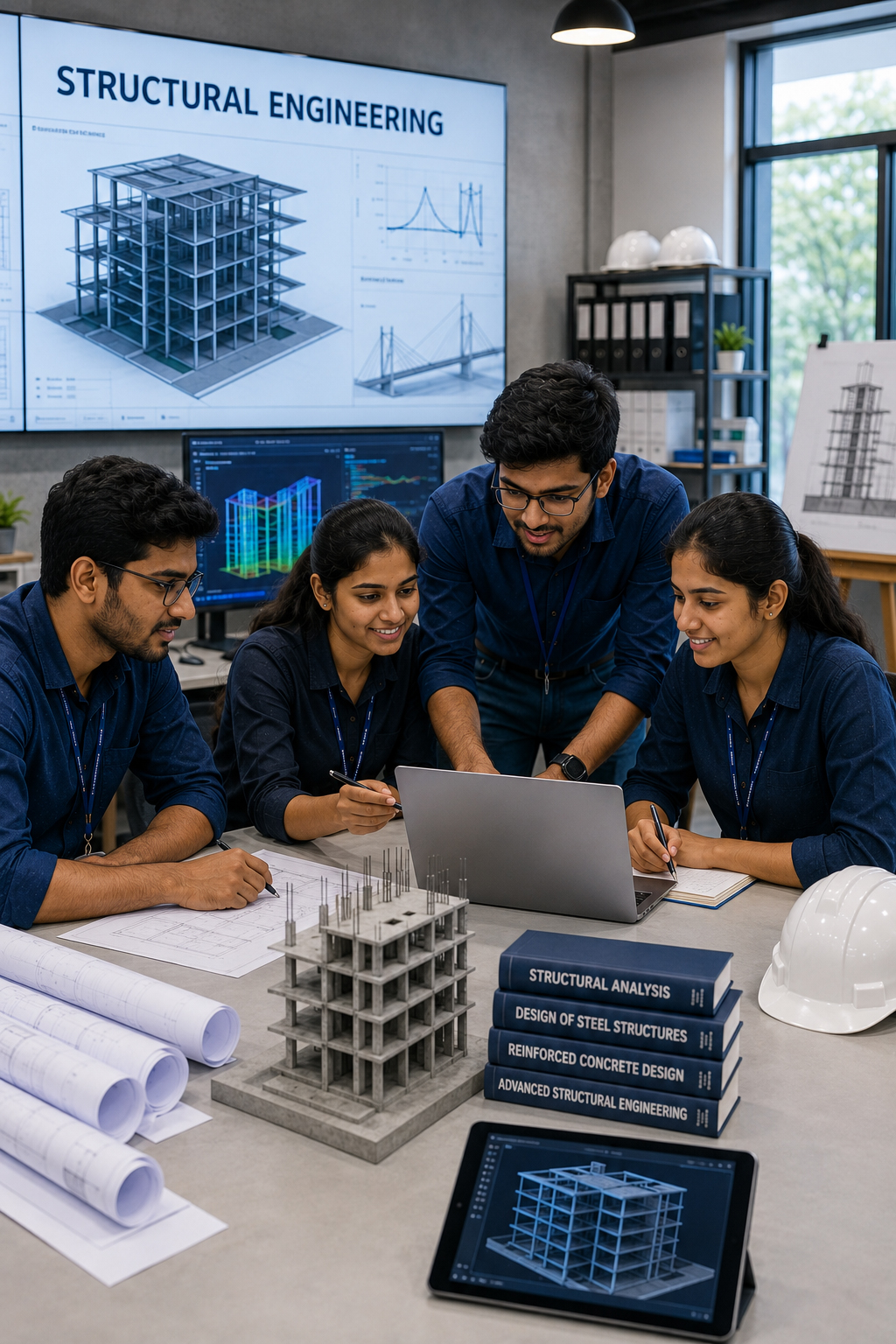
The M.E. Structural Engineering programme at Maria College of Engineering and Technology is designed to develop highly skilled structural engineers with advanced knowledge in structural analysis, design, construction technologies, research, and sustainable infrastructure development.
The programme provides advanced theoretical and practical knowledge in structural mechanics, structural analysis, reinforced concrete structures, steel structures, earthquake engineering, advanced concrete technology, finite element analysis, structural dynamics, and structural design.
Students gain practical exposure through advanced laboratories, structural modelling, design software, research projects, industrial visits, technical seminars, internships, workshops, and dissertation work.
The programme prepares graduates to address complex structural engineering challenges and contribute to the design of safe, economical, resilient, and sustainable infrastructure.
About the Course
The Master of Engineering (M.E.) in Structural Engineering is a postgraduate programme designed to provide advanced knowledge and professional expertise in the analysis, design, construction, and maintenance of structural systems.
The programme covers advanced structural analysis, reinforced concrete design, steel structure design, earthquake engineering, structural dynamics, finite element methods, advanced concrete technology, structural rehabilitation, bridge engineering, and computational structural analysis.
Students develop expertise through advanced laboratory experiments, structural modelling, design projects, seminars, internships, research activities, and a comprehensive postgraduate dissertation.
Vision & Mission
Vision
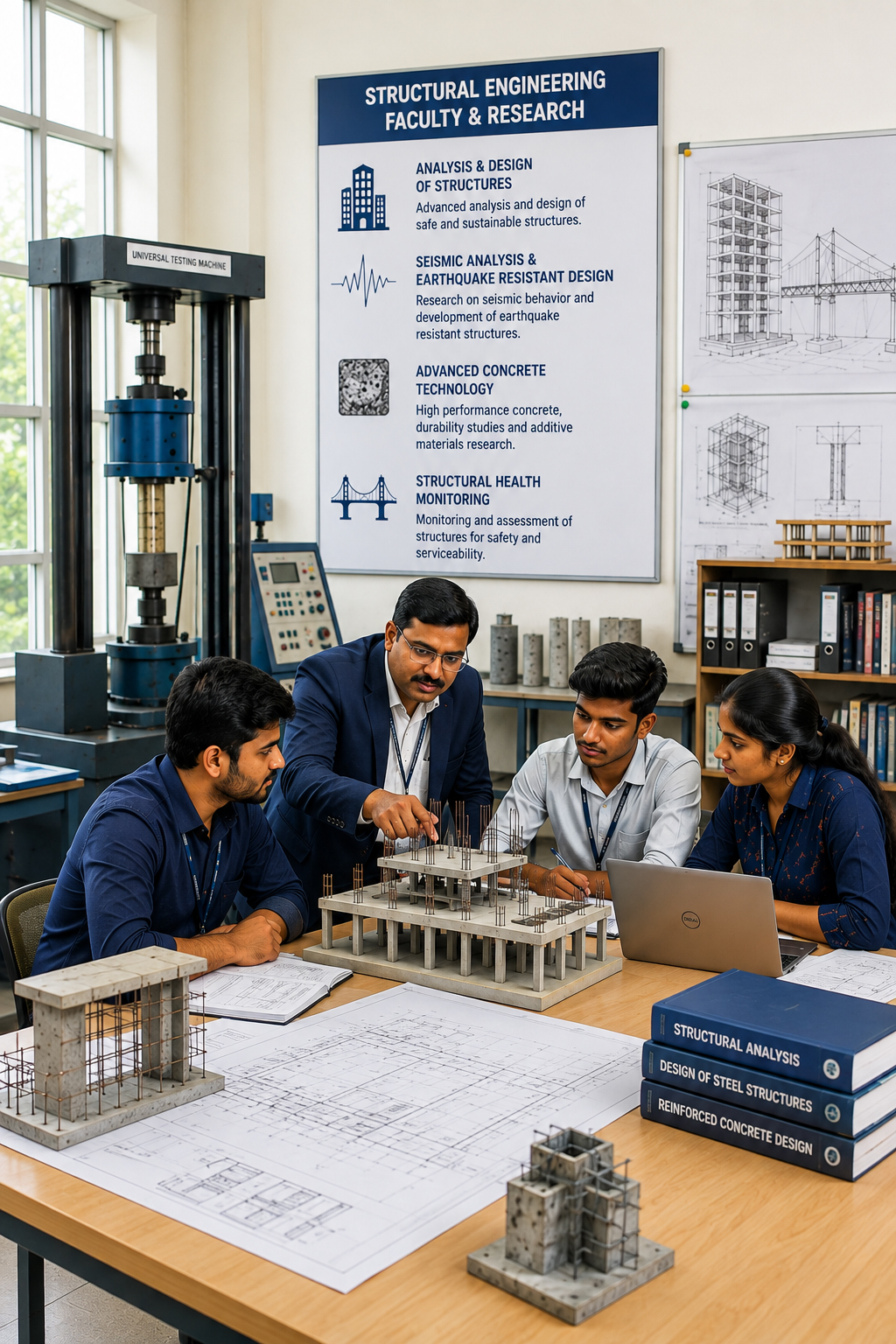
To develop advanced structural engineering professionals with strong analytical, design, research, and innovation capabilities who can contribute to safe, resilient, sustainable, and technologically advanced infrastructure.
Mission
- Provide advanced education in structural analysis, design, construction, and structural engineering technologies.
- Develop expertise in modern structural modelling, computational analysis, and design software.
- Promote research, innovation, industry collaboration, and sustainable structural engineering practices.
- Develop professional ethics, leadership, teamwork, research skills, and lifelong learning.
Career Opportunities
Structural Design Engineer
Structural Consultant
Structural Site Engineer
Structural Analyst
Bridge Design Engineer
Design Engineer
Construction Engineer
Structural Inspection Engineer
Structural Rehabilitation Engineer
Research Engineer
Academic & Teaching Professional
Engineering Consultant
Programme Educational Objectives
Advanced Technical Knowledge
Develop graduates with advanced knowledge in structural analysis, design, modelling, construction, and modern structural engineering practices.
Professional Excellence
Prepare graduates for successful careers in structural design, consultancy, construction, research, academics, and infrastructure development.
Research & Innovation
Develop research capabilities, innovation, analytical thinking, technical communication, leadership, and lifelong learning.
Sustainable Structures
Encourage graduates to design safe, economical, resilient, environmentally responsible, and sustainable structural systems.
Programme Outcomes
Apply advanced mathematics, science, and structural engineering principles to solve complex structural problems.
Analyse and design reinforced concrete, steel, composite, and other structural systems using advanced engineering methods.
Conduct advanced laboratory experiments, numerical analysis, structural modelling, and research investigations.
Develop innovative, safe, economical, resilient, and sustainable structural engineering solutions.
Apply modern structural analysis and design software, computational tools, and numerical modelling techniques.
Demonstrate professional ethics, structural safety awareness, engineering responsibility, and environmental consciousness.
Work effectively with architects, civil engineers, contractors, consultants, and multidisciplinary teams.
Communicate technical concepts, structural designs, research findings, and engineering recommendations effectively.
Understand the social, environmental, economic, and safety implications of structural engineering decisions.
Engage in lifelong learning and continuous professional development in advanced structural engineering.
Apply research and innovative thinking to address emerging challenges in structural engineering and infrastructure.
Contribute to resilient infrastructure, sustainable construction, structural rehabilitation, and technological advancement.
Structural Engineering Laboratories
Structural Analysis Laboratory
Advanced Concrete Technology Laboratory
Computer Aided Structural Design Laboratory
Structural Material Testing Laboratory
Faculty & Research
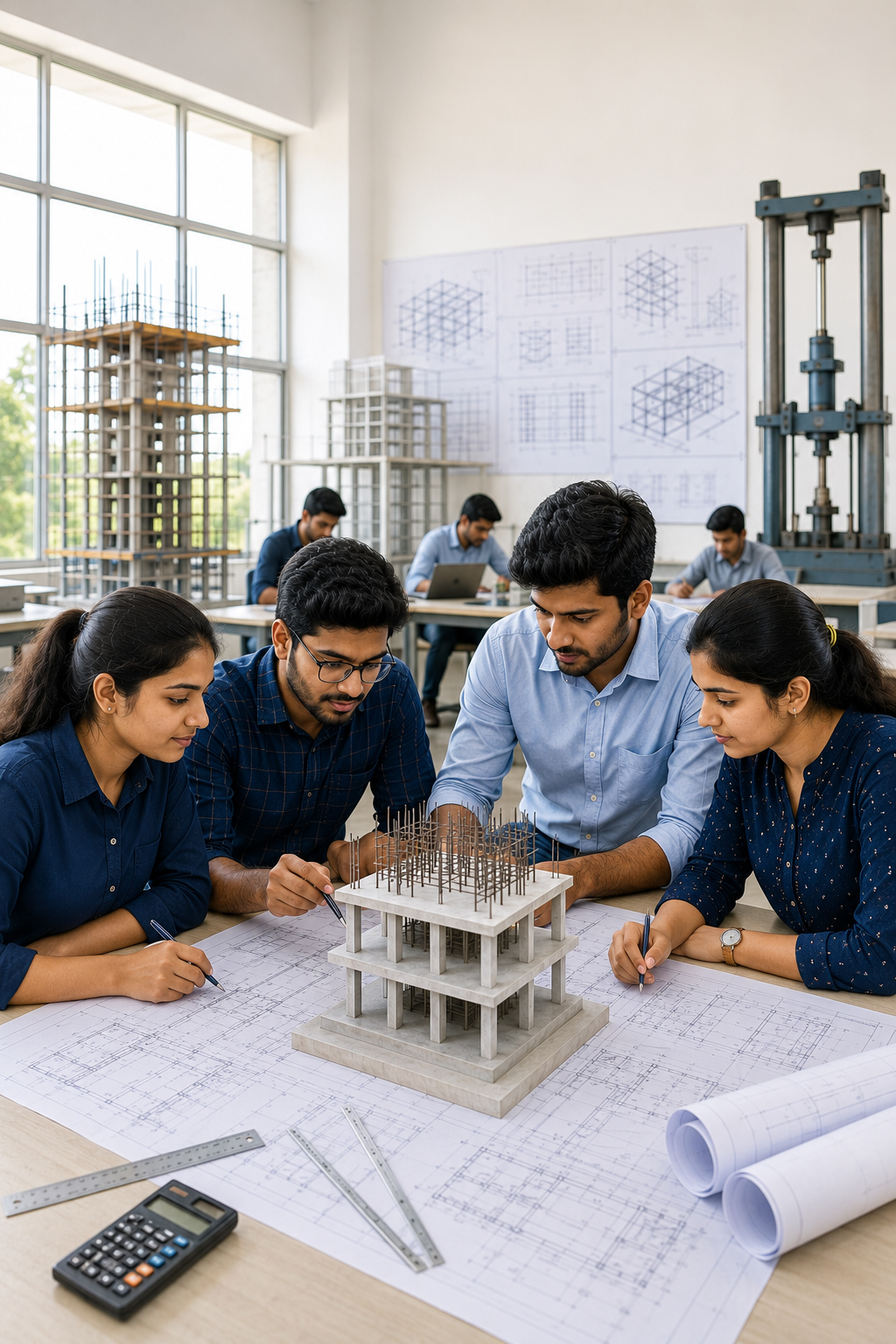
The programme is supported by qualified and experienced faculty members specializing in structural analysis, reinforced concrete structures, steel structures, earthquake engineering, structural dynamics, finite element analysis, advanced construction materials, and structural rehabilitation.
Research activities focus on sustainable construction materials, advanced concrete, structural health monitoring, seismic-resistant structures, finite element modelling, smart structures, structural rehabilitation, composite structures, and resilient infrastructure.
Academic & Research Activities
Structural Design Workshops
Structural Software Training
Industrial Visits
Research Projects
Site Exposure
Technical Paper Presentations
Internship Programmes
Innovation & Research
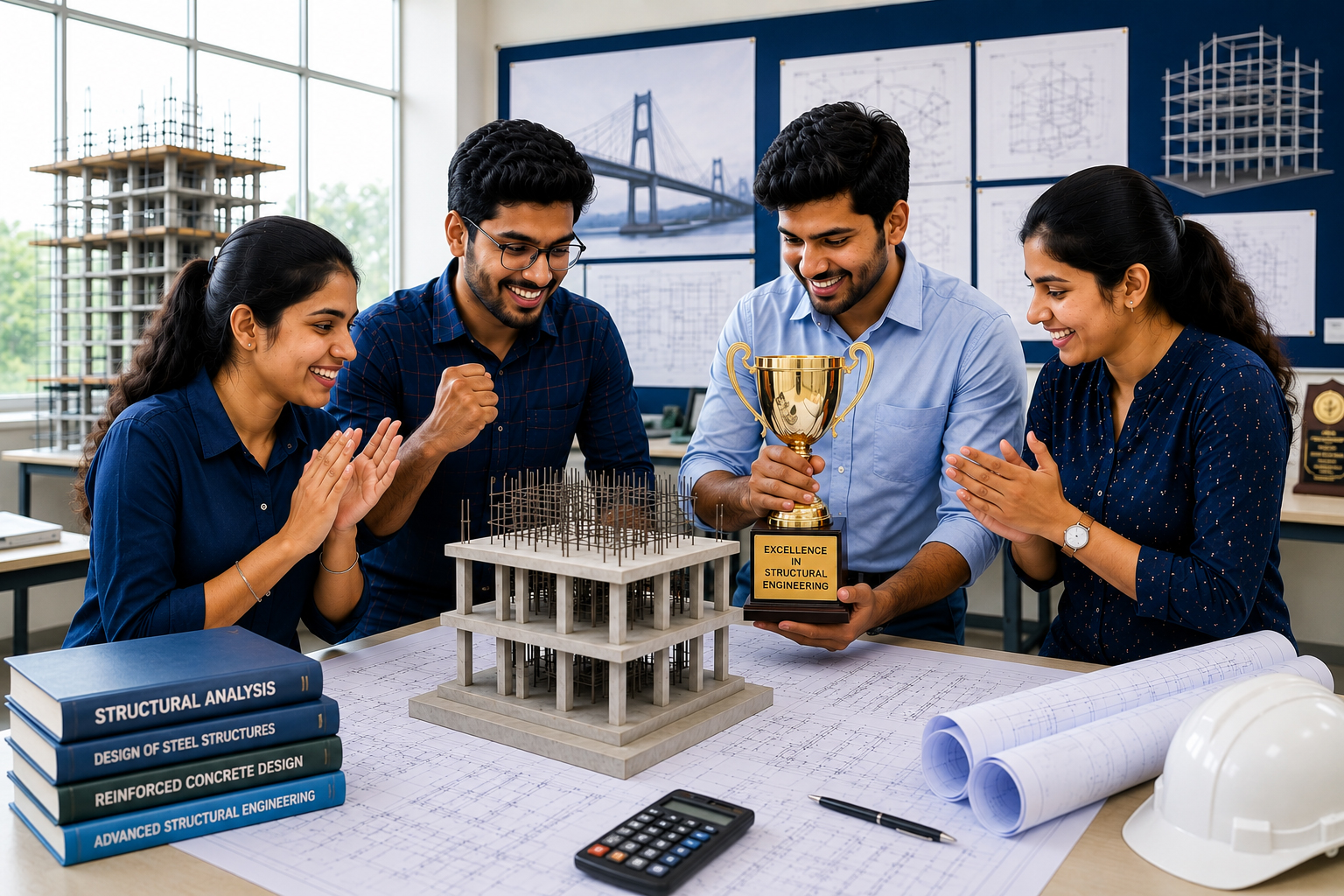
Programme Achievements
The M.E. Structural Engineering programme encourages postgraduate students to develop advanced technical, analytical, research, and professional capabilities through academic and industry-oriented activities.
Students participate in structural design competitions, technical seminars, research conferences, workshops, industrial visits, advanced software training, research projects, and postgraduate dissertation activities.
Through advanced education, research, industry interaction, practical exposure, and continuous professional development, the programme prepares graduates to contribute effectively to structural engineering, infrastructure development, research, consultancy, and higher education.