- Contact Number:
- +91 9443150352
B.E. Electronics and Communication Engineering
Department of Electronics & Communication Engineering
About the Department
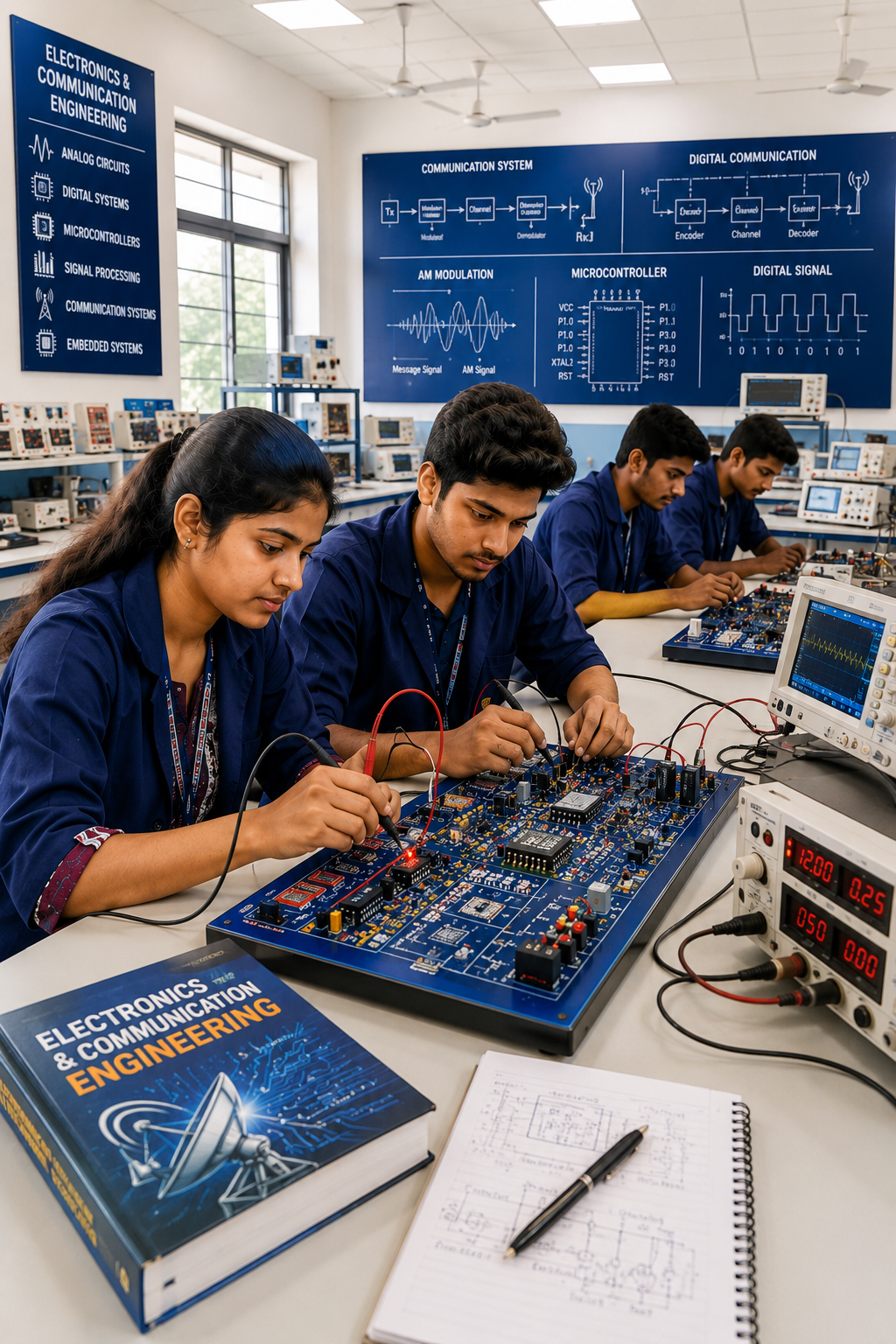
The Department of Electronics and Communication Engineering at Maria College of Engineering and Technology is committed to developing technically proficient engineers with strong fundamentals, practical expertise, innovative thinking, and professional ethics.
The department provides quality engineering education through a balanced combination of theoretical concepts, laboratory practice, industrial exposure, research, internships, and project-based learning.
Students gain comprehensive knowledge in electronic circuits, digital electronics, communication systems, signal processing, embedded systems, microprocessors, microcontrollers, VLSI design, wireless communication, optical communication, IoT, artificial intelligence, and modern networking technologies.
Students are encouraged to participate in technical symposiums, workshops, industrial visits, internships, project exhibitions, design competitions, research activities, coding events, and entrepreneurship programmes.
About the Course
The Bachelor of Engineering (B.E.) in Electronics and Communication Engineering is a four-year undergraduate programme that provides comprehensive knowledge in electronics, communication systems, digital technologies, embedded systems, and emerging areas of engineering.
The programme covers electronic devices and circuits, digital electronics, analog and digital communication, signal processing, microprocessors, microcontrollers, embedded systems, VLSI, wireless communication, optical communication, IoT, computer networks, and intelligent electronic systems.
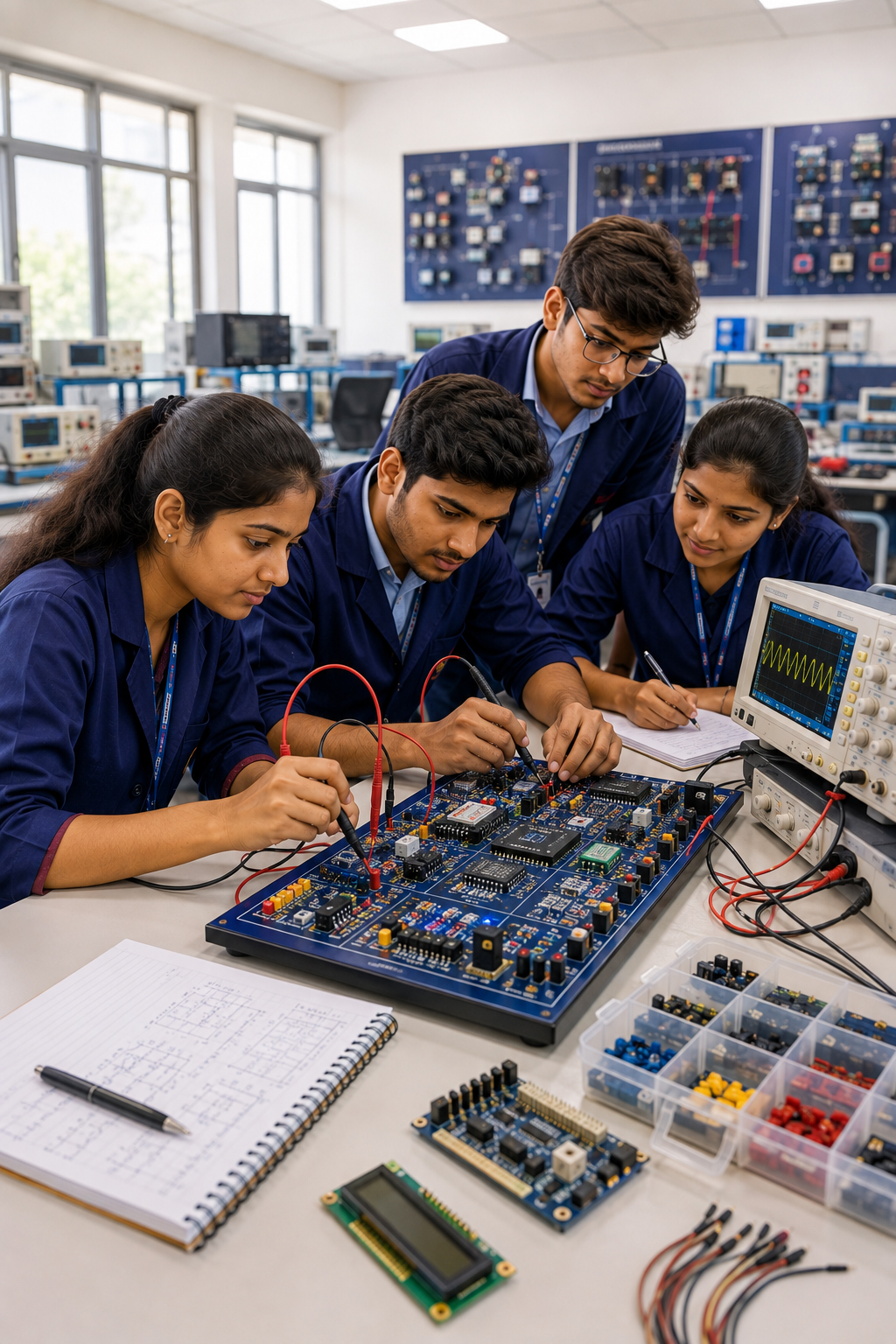
The curriculum combines classroom learning with laboratory experiments, workshops, industrial training, internships, technical projects, mini projects, and major projects to provide students with strong practical and professional exposure.
Vision & Mission
Vision
To develop technically competent and innovative Electronics and Communication Engineering professionals with strong research capabilities, ethical values, leadership qualities, and the ability to contribute to global technological advancement and societal development.
Mission
- Provide quality education in Electronics and Communication Engineering with strong theoretical and practical skills.
- Develop expertise in electronics, communication, embedded systems, VLSI, IoT, and emerging technologies.
- Promote research, innovation, entrepreneurship, and industry collaboration.
- Nurture professional ethics, leadership, teamwork, communication skills, and lifelong learning.
Career Opportunities
Electronics Engineer
Communication Engineer
VLSI Design Engineer
Embedded Systems Engineer
Network Engineer
Telecommunication Engineer
Wireless Communication Engineer
IoT Engineer
Signal Processing Engineer
Automation Engineer
Quality Assurance Engineer
Technology Entrepreneur
Programme Educational Objectives
Technical Excellence
Develop graduates with strong fundamentals in Electronics and Communication Engineering capable of analysing and solving complex engineering problems.
Professional Careers
Prepare graduates for successful careers in electronics, telecommunications, embedded systems, VLSI, networking, IT, research, and higher education.
Innovation & Leadership
Develop innovation, leadership, communication, teamwork, entrepreneurship, professional ethics, and lifelong learning capabilities.
Emerging Technologies
Encourage graduates to contribute to emerging technologies such as IoT, AI, 5G communication, VLSI, embedded systems, and intelligent electronic applications.
Programme Outcomes
Apply mathematics, science, and engineering principles to solve Electronics and Communication Engineering problems.
Analyse and design electronic circuits, communication systems, digital systems, and embedded applications.
Conduct experiments and analyse electronic and communication systems using appropriate engineering tools.
Develop innovative and sustainable solutions for modern electronics and communication challenges.
Apply simulation software, electronic design tools, programming platforms, and modern engineering technologies.
Demonstrate professional ethics, engineering responsibility, safety awareness, and environmental consciousness.
Work effectively in multidisciplinary teams and manage engineering projects.
Communicate technical concepts effectively through presentations, reports, documentation, and teamwork.
Understand the societal, environmental, economic, and security implications of electronic communication systems.
Engage in lifelong learning and continuous professional development in emerging technologies.
Apply innovation and entrepreneurial thinking to electronics and communication industry challenges.
Contribute to the development of IoT, 5G, VLSI, embedded systems, AI-enabled electronics, and advanced communication technologies.
Electronics & Communication Laboratories
Electronics Laboratory
Communication Systems Laboratory
Embedded Systems Laboratory
VLSI Design Laboratory
Faculty & Research
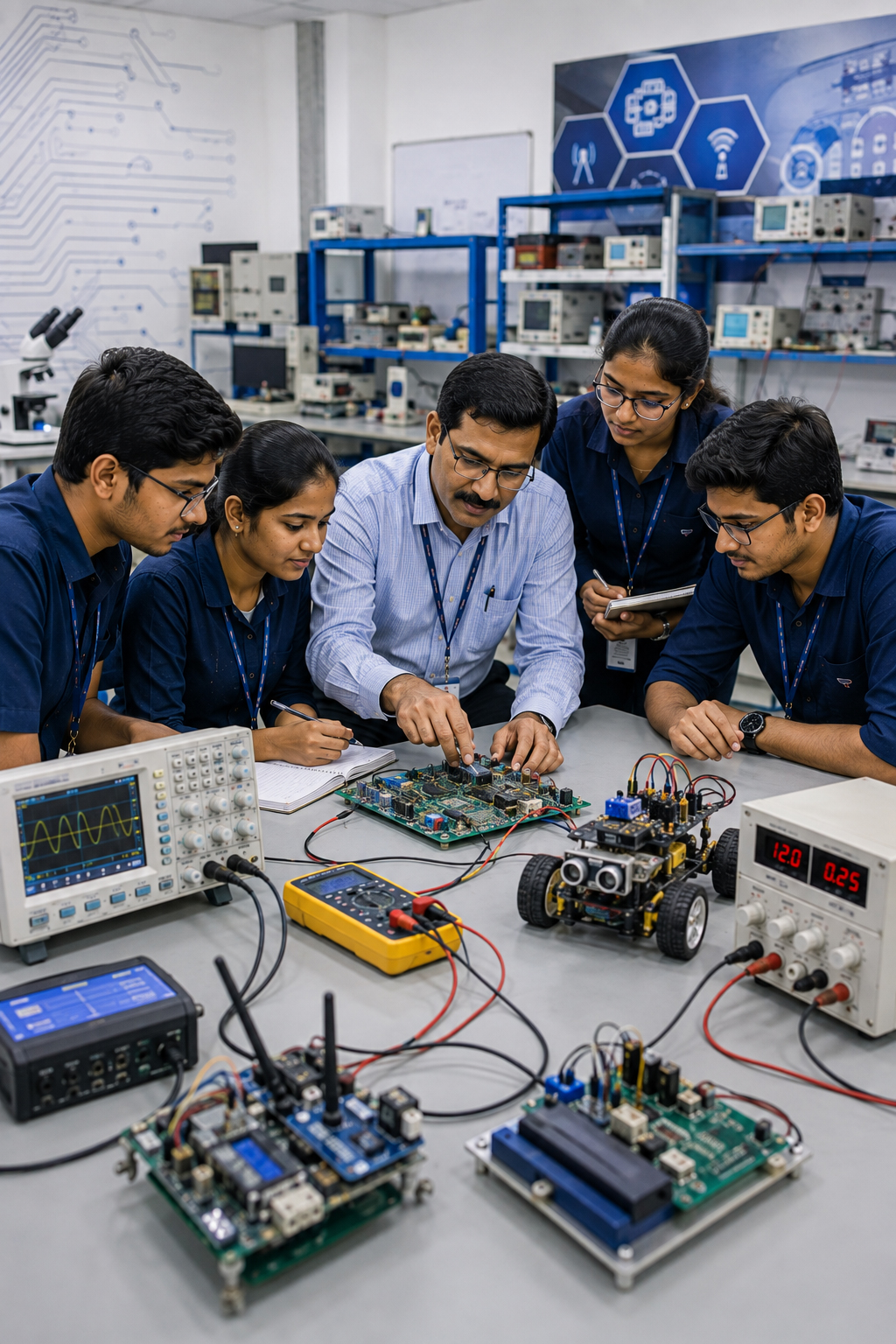
The Department of Electronics and Communication Engineering is supported by qualified and experienced faculty members specializing in VLSI design, embedded systems, digital signal processing, wireless communication, optical communication, IoT, networking, artificial intelligence, and electronic system design.
The department promotes research and innovation in 5G and next-generation communication, IoT, VLSI, embedded systems, artificial intelligence, machine learning, wireless sensor networks, image processing, signal processing, robotics, and intelligent electronic systems.
Student Activities
Electronics Workshops
Communication Training
Industrial Visits
Internship Programmes
Embedded Systems Training
IoT & Networking Projects
Project Exhibitions
Innovation & Entrepreneurship
Department Achievements
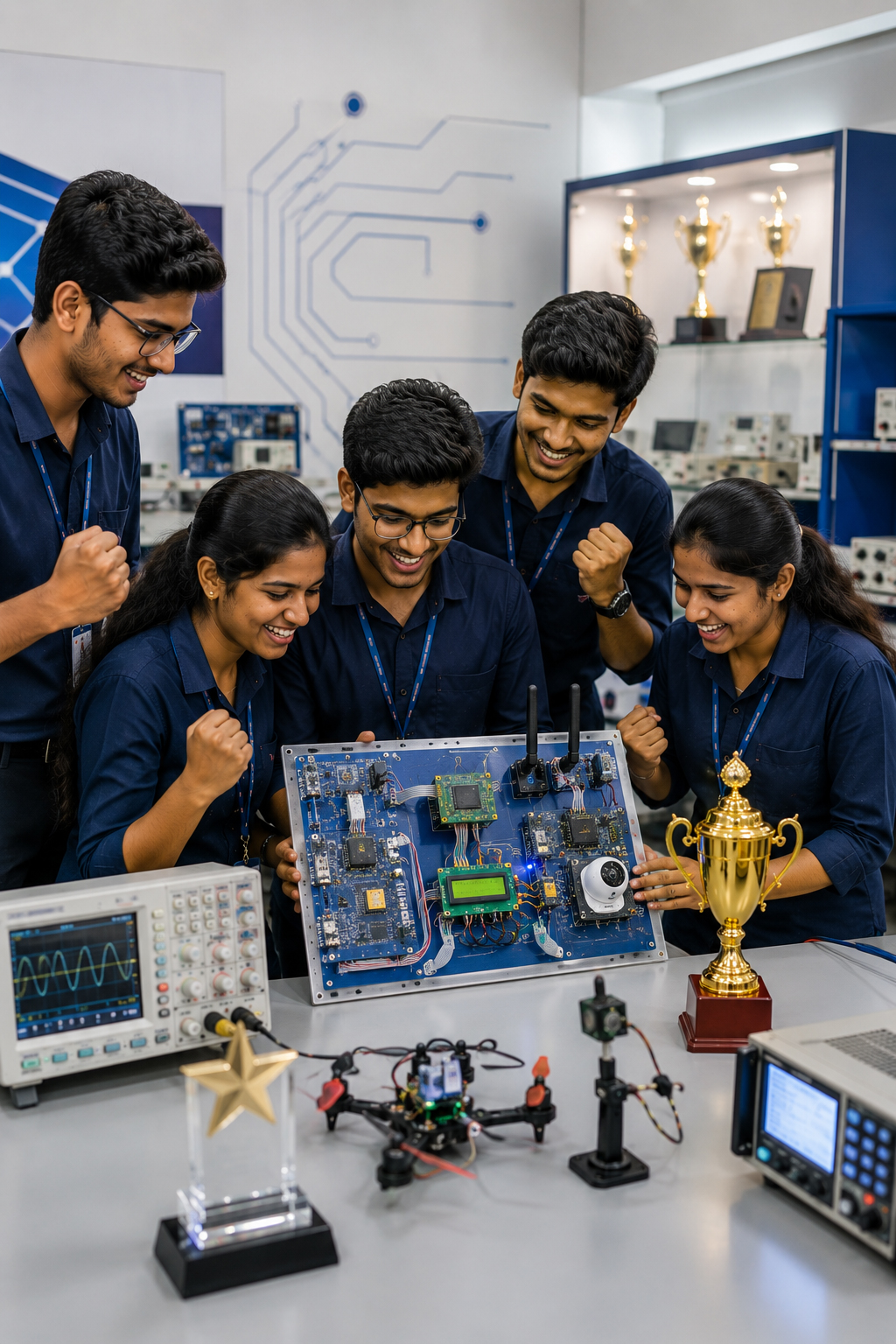
The Department of Electronics and Communication Engineering encourages students to demonstrate their technical knowledge, creativity, innovation, and problem-solving skills through academic and professional activities.
Students actively participate in technical symposiums, project exhibitions, electronics design competitions, coding events, workshops, industrial training, research activities, and innovation challenges.
Through continuous academic development, practical training, research, industry interaction, and skill development, the department strives to produce highly competent Electronics and Communication Engineers prepared for emerging technologies and global industries.