- Contact Number:
- +91 9443150352
M.E. Power Systems Engineering
M.E. Power Systems Engineering
About the Programme
The M.E. Power Systems Engineering programme at Maria College of Engineering and Technology is designed to develop highly skilled electrical engineering professionals with advanced knowledge in power generation, transmission, distribution, protection, control, and modern energy systems.
The programme provides advanced theoretical and practical knowledge in power system analysis, high voltage engineering, electrical machines, power system protection, power electronics, smart grids, renewable energy systems, distributed generation, energy management, and modern power system operation.
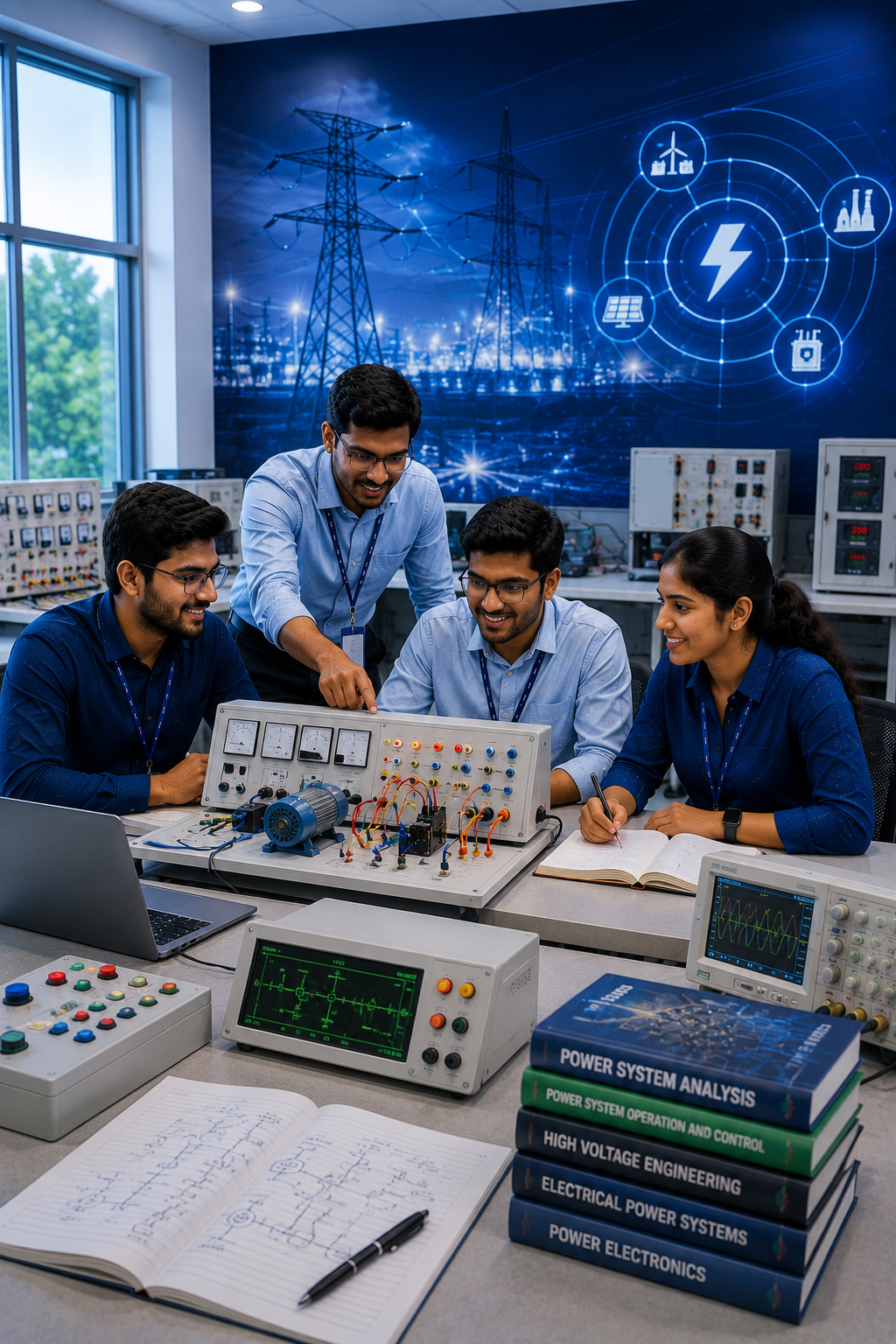
Students gain practical and research-oriented experience through advanced electrical laboratories, simulation tools, industrial visits, internships, technical workshops, seminars, research projects, and postgraduate dissertation work.
The programme prepares graduates to address complex energy challenges and contribute to reliable, efficient, sustainable, and intelligent power infrastructure.
About the Course
The Master of Engineering (M.E.) in Power Systems Engineering is a postgraduate programme designed to provide advanced knowledge and professional expertise in the analysis, planning, operation, control, protection, and management of modern electrical power systems.
The programme covers advanced power system analysis, stability, protection and control, high voltage engineering, power quality, power electronics, renewable energy, distributed generation, smart grids, energy management, electrical drives, and modern power system technologies.
Students develop advanced technical and research skills through laboratory experiments, computer simulations, design projects, seminars, industrial training, internships, research activities, and a comprehensive postgraduate dissertation.
Vision & Mission
Vision
To develop advanced power engineering professionals with strong analytical, technical, research, and innovation capabilities who can contribute to reliable, intelligent, efficient, and sustainable energy systems.
Mission
- Provide advanced education in power system analysis, operation, control, protection, and planning.
- Develop expertise in smart grids, renewable energy, power electronics, energy management, and modern electrical technologies.
- Promote research, innovation, industry collaboration, and sustainable energy solutions.
- Develop professional ethics, leadership, teamwork, communication, research skills, and lifelong learning.
Career Opportunities
Power Systems Engineer
Power Grid Engineer
Electrical Design Engineer
Protection Engineer
Renewable Energy Engineer
Power Electronics Engineer
Energy Management Engineer
Control Systems Engineer
Electrical Maintenance Engineer
Research Engineer
Academic & Teaching Professional
Energy Consultant
Programme Educational Objectives
Advanced Technical Knowledge
Develop graduates with advanced knowledge in power system analysis, operation, protection, control, planning, and modern electrical energy technologies.
Professional Excellence
Prepare graduates for successful careers in power utilities, renewable energy, electrical industries, consultancy, research, and academia.
Research & Innovation
Develop research capabilities, innovation, analytical thinking, technical communication, leadership, entrepreneurship, and lifelong learning.
Sustainable Energy Systems
Encourage graduates to develop reliable, efficient, economical, intelligent, and environmentally sustainable power system solutions.
Programme Outcomes
Apply advanced mathematics, electrical engineering, and power system principles to solve complex energy system problems.
Analyse, design, plan, and operate modern electrical power generation, transmission, and distribution systems.
Conduct advanced simulations, laboratory experiments, numerical analysis, and research investigations in power systems.
Develop innovative, reliable, efficient, economical, and sustainable solutions for modern power system challenges.
Apply modern power system simulation software, protection tools, control systems, and computational techniques.
Demonstrate professional ethics, electrical safety, engineering responsibility, and environmental awareness.
Work effectively in multidisciplinary teams and manage electrical power and energy projects.
Communicate technical concepts, simulation results, research findings, and engineering recommendations effectively.
Understand the social, economic, environmental, regulatory, and safety implications of electrical energy systems.
Engage in lifelong learning and continuous professional development in power and energy technologies.
Apply research and entrepreneurial thinking to develop innovative power and energy solutions.
Contribute to smart grids, renewable energy integration, energy efficiency, power quality, and sustainable energy development.
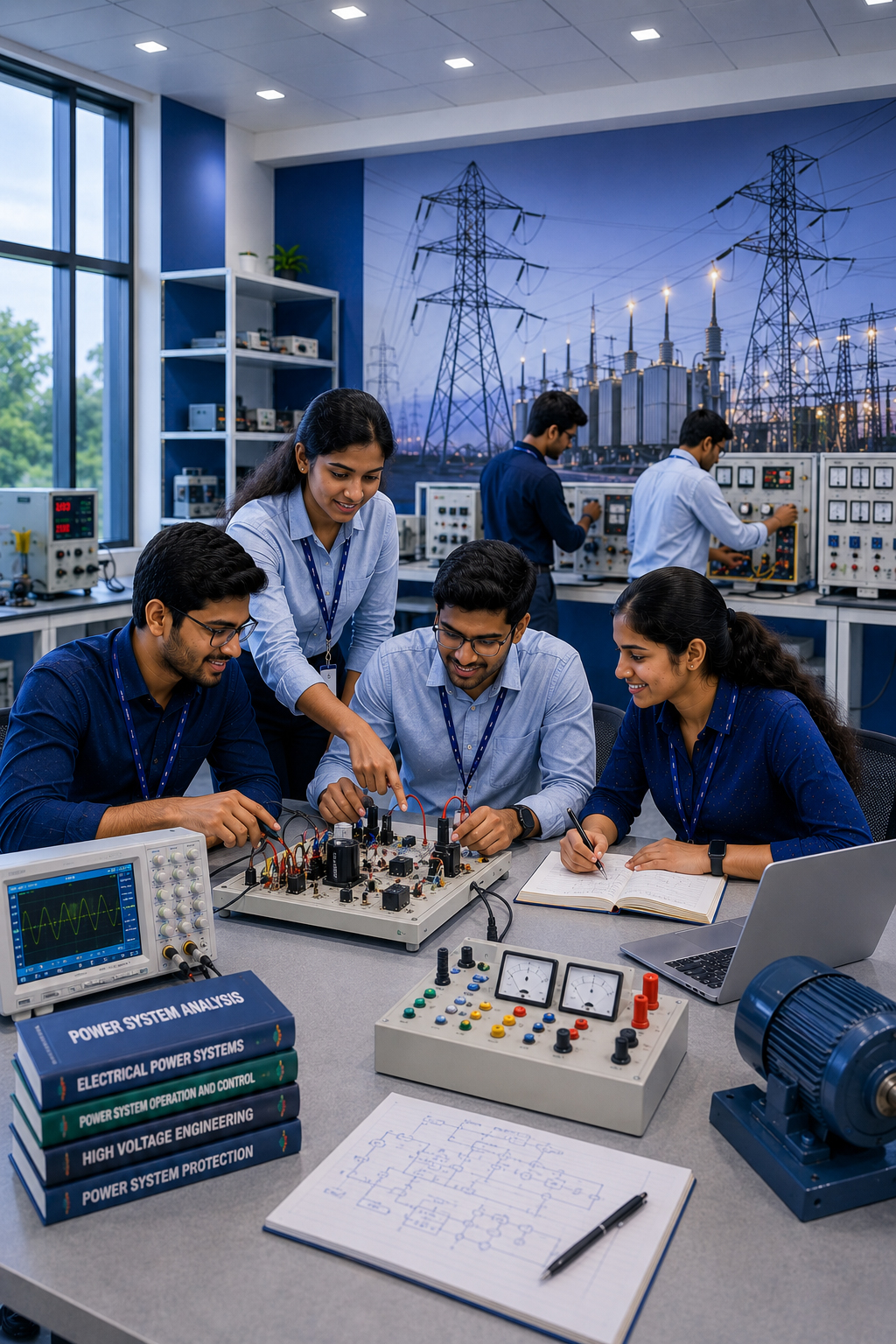
Power Systems Laboratories
Power System Laboratory
Power System Protection Laboratory
Smart Grid Laboratory
Renewable Energy Laboratory
Faculty & Research
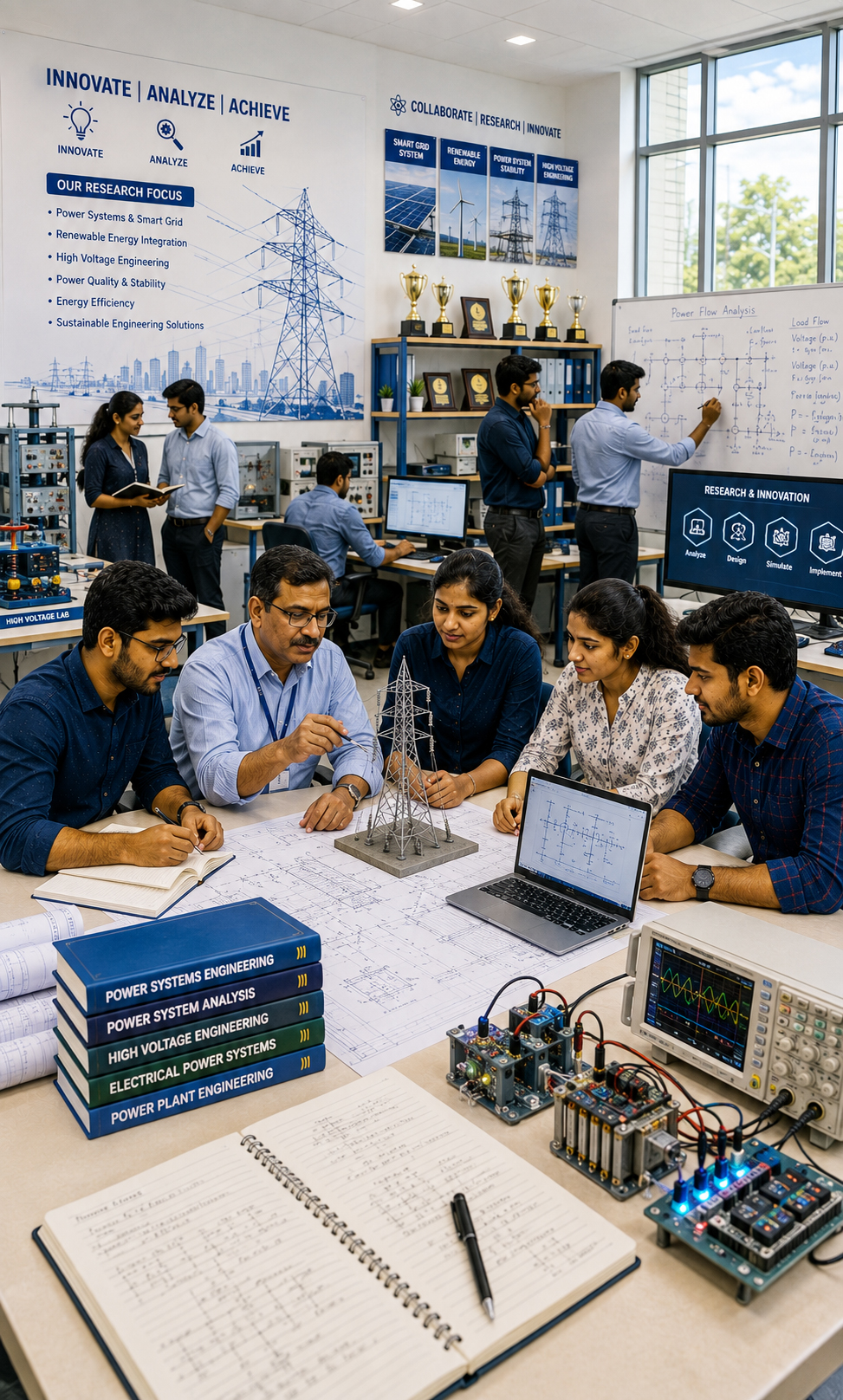
The programme is supported by qualified and experienced faculty members specializing in power system analysis, protection, control, high voltage engineering, renewable energy, smart grids, power electronics, electrical machines, and energy management.
Research activities focus on smart grids, renewable energy integration, distributed generation, power quality, energy storage, power system stability, intelligent protection, microgrids, electric vehicles, energy management, and sustainable power systems.
Academic & Research Activities
Power System Workshops
Smart Grid Training
Renewable Energy Projects
Protection & Control Training
Industrial Visits
Research Projects
Research Paper Presentations
Energy Innovation
Programme Achievements
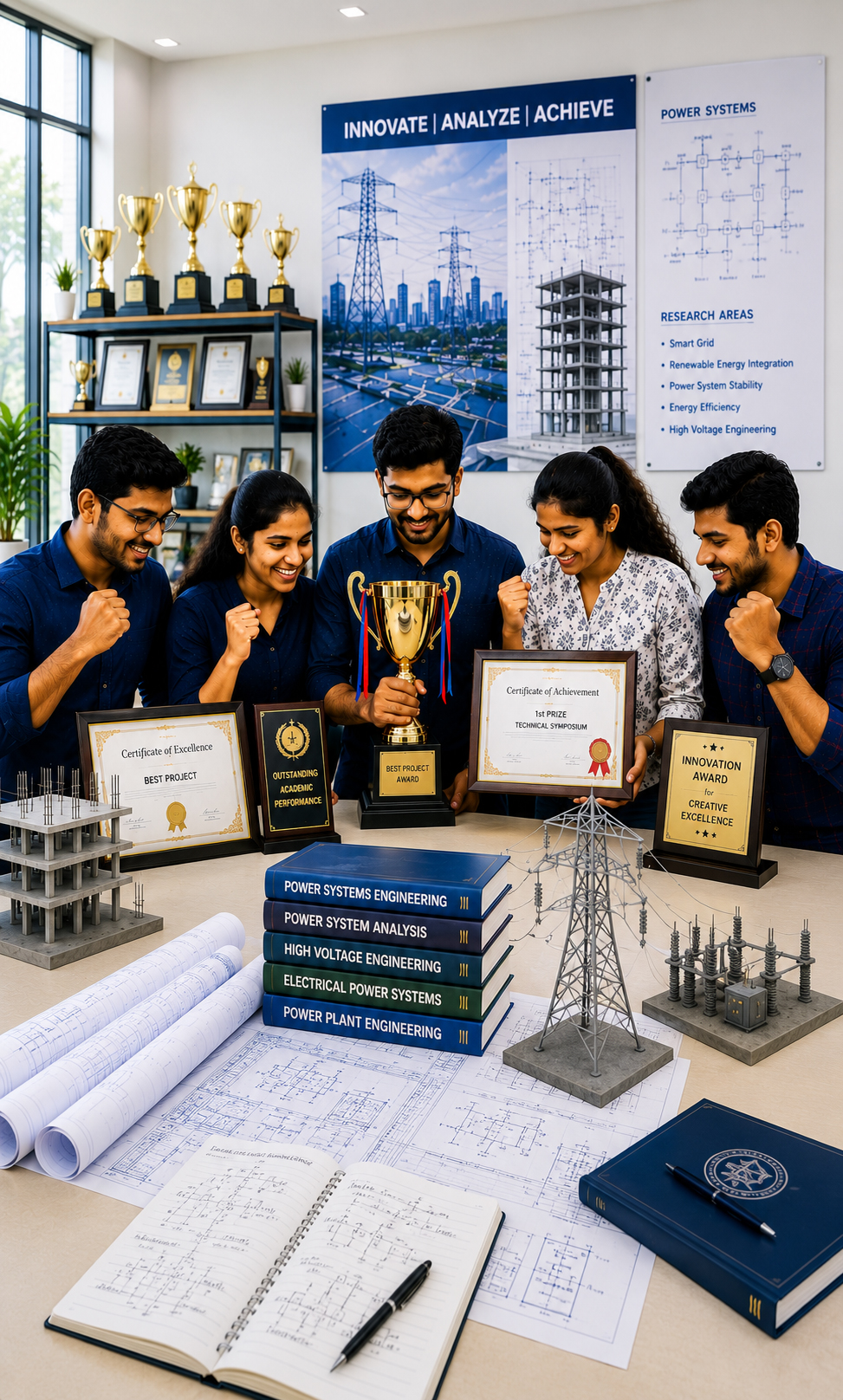
The M.E. Power Systems Engineering programme encourages postgraduate students to develop advanced technical, analytical, research, and professional capabilities through academic and industry-oriented activities.
Students participate in power system design activities, technical seminars, renewable energy workshops, smart grid training, industrial visits, simulation projects, research conferences, internships, and postgraduate dissertation activities.
Through advanced education, research, industry interaction, practical exposure, and continuous professional development, the programme prepares graduates to contribute effectively to power utilities, renewable energy industries, electrical consultancies, research institutions, and academia.